
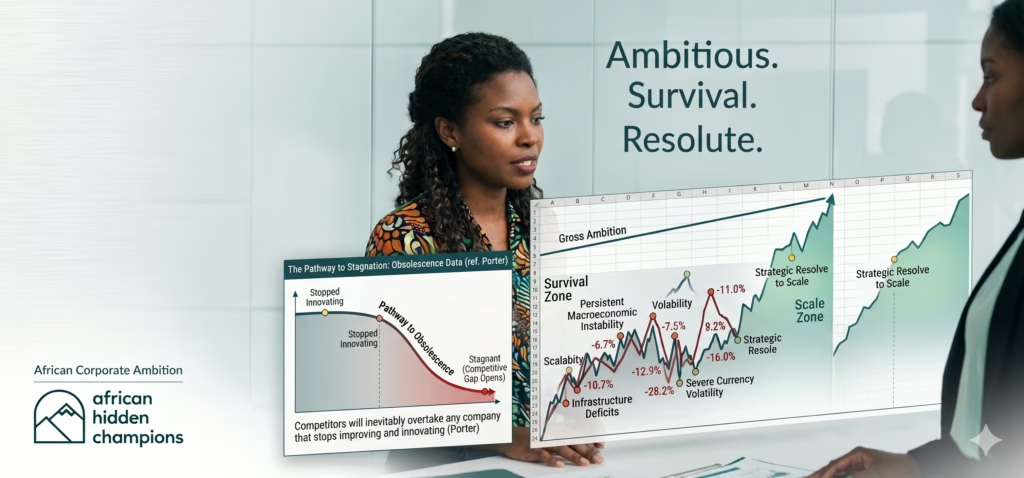
Contrary to popular belief, African companies are highly ambitious. Several factors, however, curb their ability to execute and scale at the level their ambitions demand. In a region marked by persistent macroeconomic instability, currency volatility and infrastructure deficits, surviving as a business in Africa requires a level of strategic resolve that is itself a form of ambition. Having said that, bear in mind that survival without scaling is a pathway to eventual irrelevance. Businesses that do not grow tend not to merely stagnate; they drift toward obsolescence, as highlighted by Michael E. Porter, Harvard Business Review - The Competitive Advantage of Nations “Competitors will eventually and inevitably overtake any company that stops improving and innovating.”
Three primary factors determine whether an African business can scale within and beyond the continent. The first is access to the right capital, structured for business cycles rather than short-term returns. The second is the ability to navigate regulatory environments that were rarely designed with growth-stage private businesses in mind. The third, and most decisive, is the ability to access, develop, and retain the talent required to move the business from its current state to its desired one. This is not theoretical. African Development Bank and wider firm-level research consistently show that finance, the enabling regulatory environment, and human capital remain among the central constraints on African business growth and scale.
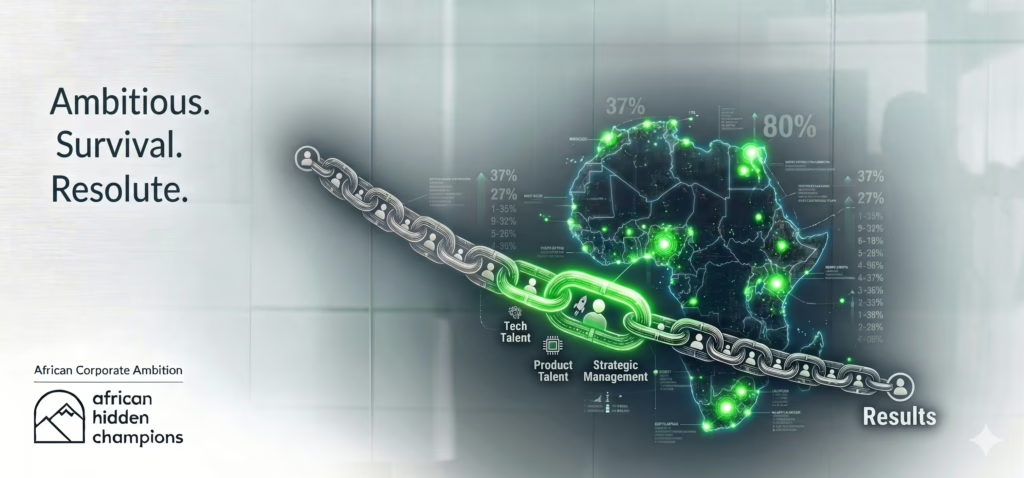
Of these three, talent stands apart. More than 80% of African business executives report that it is moderately or very difficult to hire tech, product, or strategic talent on the continent. This is not a sectoral problem. Across manufacturing, financial services, consumer goods, and professional services, the pattern holds: the ambition exists, the strategy exists, and the capital is increasingly findable. What remains scarce is the quality of human capital required to execute both. PwC's 2026 Africa CEO Survey found that only 37% of African CEOs believe they can find and retain the talent needed to drive their core strategic initiatives, a figure that speaks directly to the execution gap between what African businesses intend and what they are able to deliver.
This is not a problem that resolves itself through good intentions. About 50% of Africa's software developers are concentrated in just five countries, South Africa, Nigeria, Morocco, Kenya, and Egypt, while the World Bank documents a sustained brain drain of skilled professionals from the continent to higher-paying markets globally. The talent that does exist is concentrated, contested, and increasingly mobile in directions that work against African businesses.
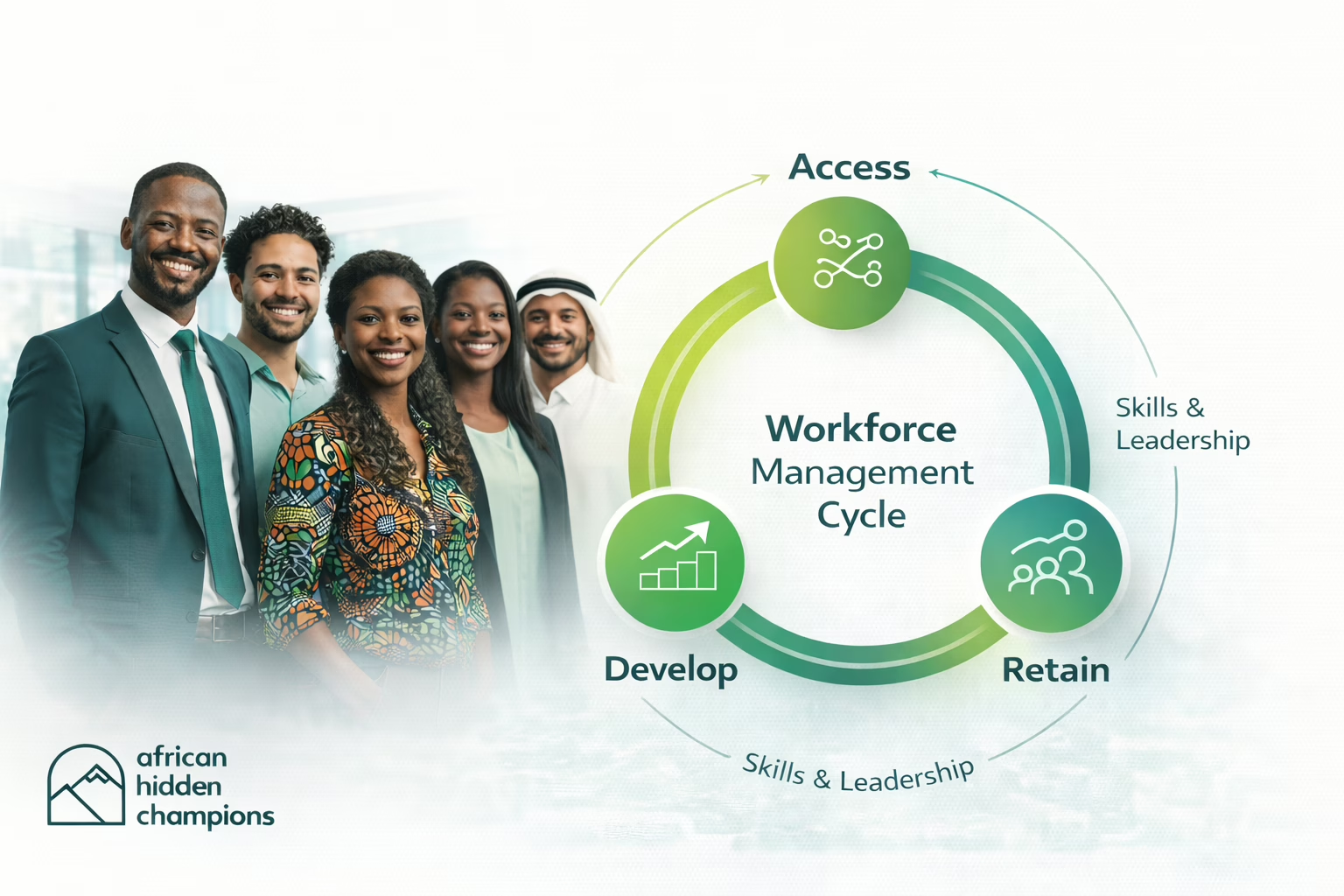
What does it mean to access, develop, and retain the right talent? The right talent is not always the most credentialed but the most fitted for a specific business model at a specific stage of growth. A company must know how to identify and secure best-fit talent systematically, not reactively. The primary tool for achieving this is the Workforce Management Cycle, a structured, end-to-end approach that shifts a business from reactive hiring to proactive talent management, aligning people strategy with commercial objectives at every stage of the business cycle.
The Workforce Management Cycle
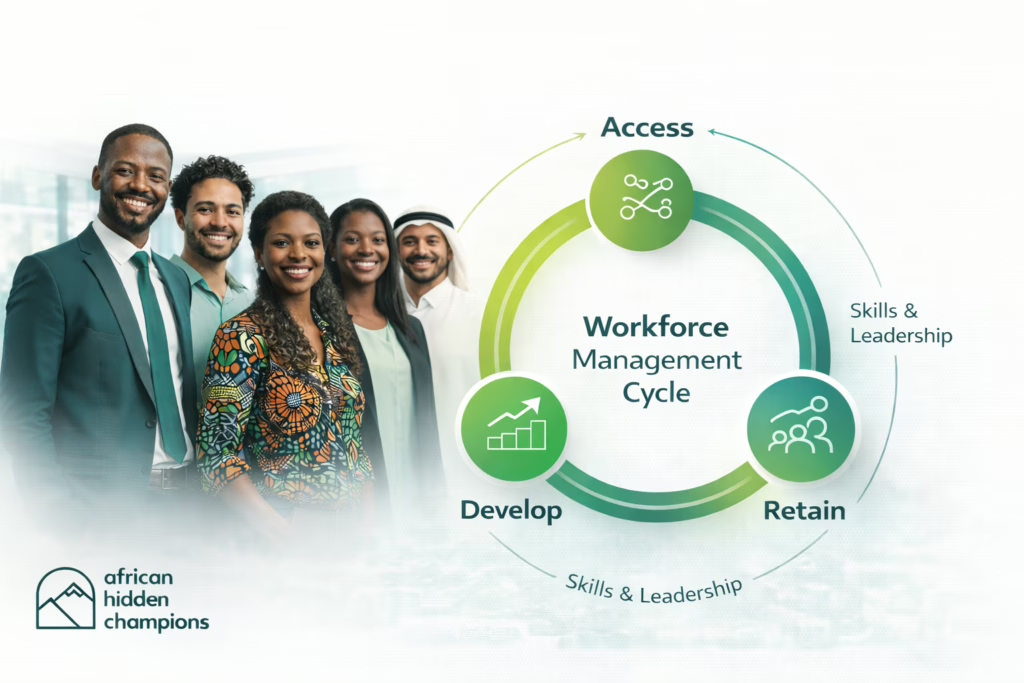
The cycle operates across three interdependent phases: Access, Develop and Retain (ADR). Each phase builds on the one before it. A weakness at any stage creates compounding problems downstream.
Access is where most businesses start and where many fail. The default approach, posting a vacancy, reviewing applications, and hiring the best-credentialled candidate available, is reactive by design. It fills a hole rather than builds a team. For African mid-market businesses competing against multinationals and international opportunities for the same talent pool, reactive hiring is a structural disadvantage.
The Access phase replaces this with two deliberate steps. The first is mapping: before any hiring activity, the business conducts a structured workforce audit. Which roles are mission-critical for the next 12 to 36 months? What competencies does the business currently have versus what it will need? Where are the widest gaps? This is a strategic exercise, not an HR formality, and its output is a talent architecture that makes every subsequent hiring decision faster, cheaper, and more precise.
The second step is sourcing differently. Rather than competing on credentials, the Access phase asks a different question: who is most likely to perform, grow, and stay in this specific business, in this specific market, at this specific stage? That shift leads to different channels, criteria, and candidate profiles. It also leads to proactive sourcing, building relationships with potential candidates before vacancies arise, so the business is never scrambling to fill a role that has already cost it productivity.
Develop addresses the question this article began with. The most sustainable source of senior talent for a scaling African company is its own workforce, deliberately built over time. Businesses that skip this phase find themselves in a permanent cycle of external hiring, searching outside for capabilities that could have been grown inside, while paying recruitment, onboarding, and productivity costs each time.
The Develop phase works across three levels. Skills development closes technical and managerial competency gaps through structured training, stretch assignments, and regular feedback. Leadership development identifies employees with the highest potential to take on broader accountability and invests in them before the need becomes urgent, because building a leader takes longer than finding one. Performance management creates a system of clear expectations and honest conversations that allows high performance to be recognised and underperformance to be addressed before it becomes a crisis.
The compounding effect of the Develop phase is significant. Every employee who grows into a senior role internally represents a recruitment cost avoided, cultural continuity preserved, and institutional knowledge retained. Over time, businesses that invest in development build workforces that become more capable at an accelerating rate.
Retain is where the investment in the first two phases is either protected or lost. Across African markets, employees are rarely leaving only for higher salaries. They leave because they cannot see a future for themselves inside the organisation, because their contributions go unrecognised, or because a competitor has made a more compelling case for what their career could become.
The Retain phase creates the conditions that make staying the stronger choice. Clear career pathways so talented employees can see where their ambition leads inside the company. Recognition systems that operate continuously rather than annually. Compensation that is competitive for the market context. A culture where feedback flows in both directions, employees feel genuinely heard, and the company’s growth ambitions are explicitly connected to individual opportunity.
For mid-market African businesses that cannot match the headline salaries of multinational employers, the Retain phase is where meaningful differentiation is achievable. A multinational can offer a higher base. It cannot offer proximity to strategic decisions, ownership of a market, or the pride of building something that belongs to Africa. Businesses that articulate and operationalise that value proposition will retain talent that a purely transactional employment relationship would lose.
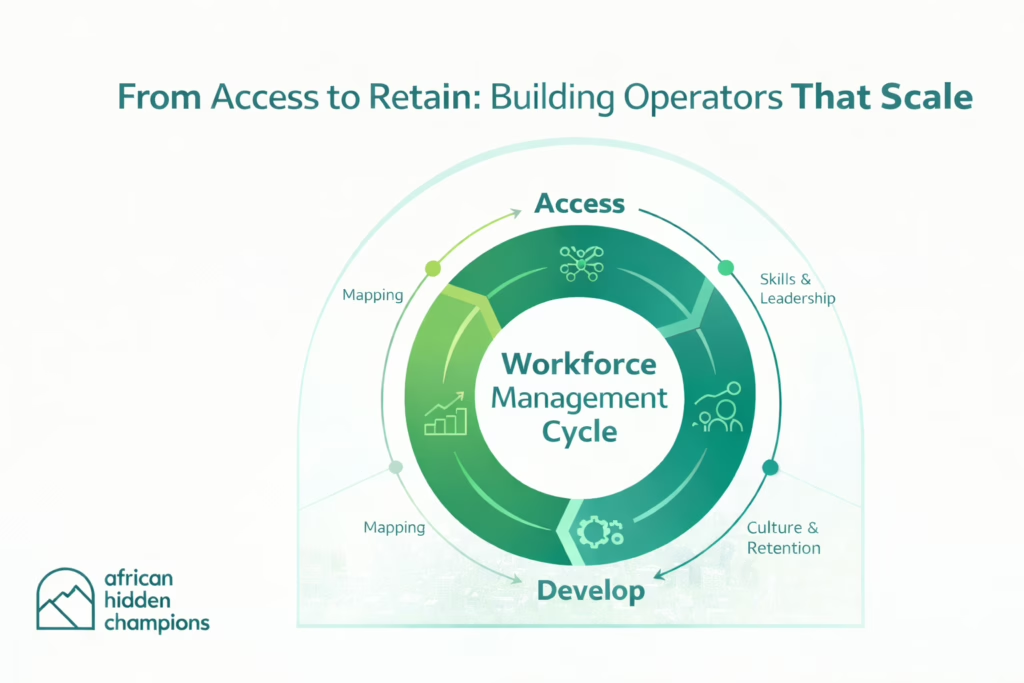
The Cycle as a System
The three phases do not operate in sequence. They run simultaneously and continuously. The mapping done in Access informs what the Develop phase prioritises. The development pathways created in Develop strengthen the retention conditions of the Retain phase. The institutional knowledge preserved through Retain makes future Access faster and more accurate.
This is how the Workforce Management Cycle answers the question this article began with. African businesses do not lack ambition. They do not lack strategy. What the most successful among them have, and what the rest can build, is a structured, repeatable system for creating the operators that ambition and strategy require. The end goal is a self-reinforcing business ecosystem in which people's strategy and commercial strategy compound each other, creating the conditions for growth that is not just rapid but durable
This is precisely why initiatives such as African Hidden Champions' AHC PEAK matter, because scale depends not only on accessing talent but also on building the systems to develop it over time.
