
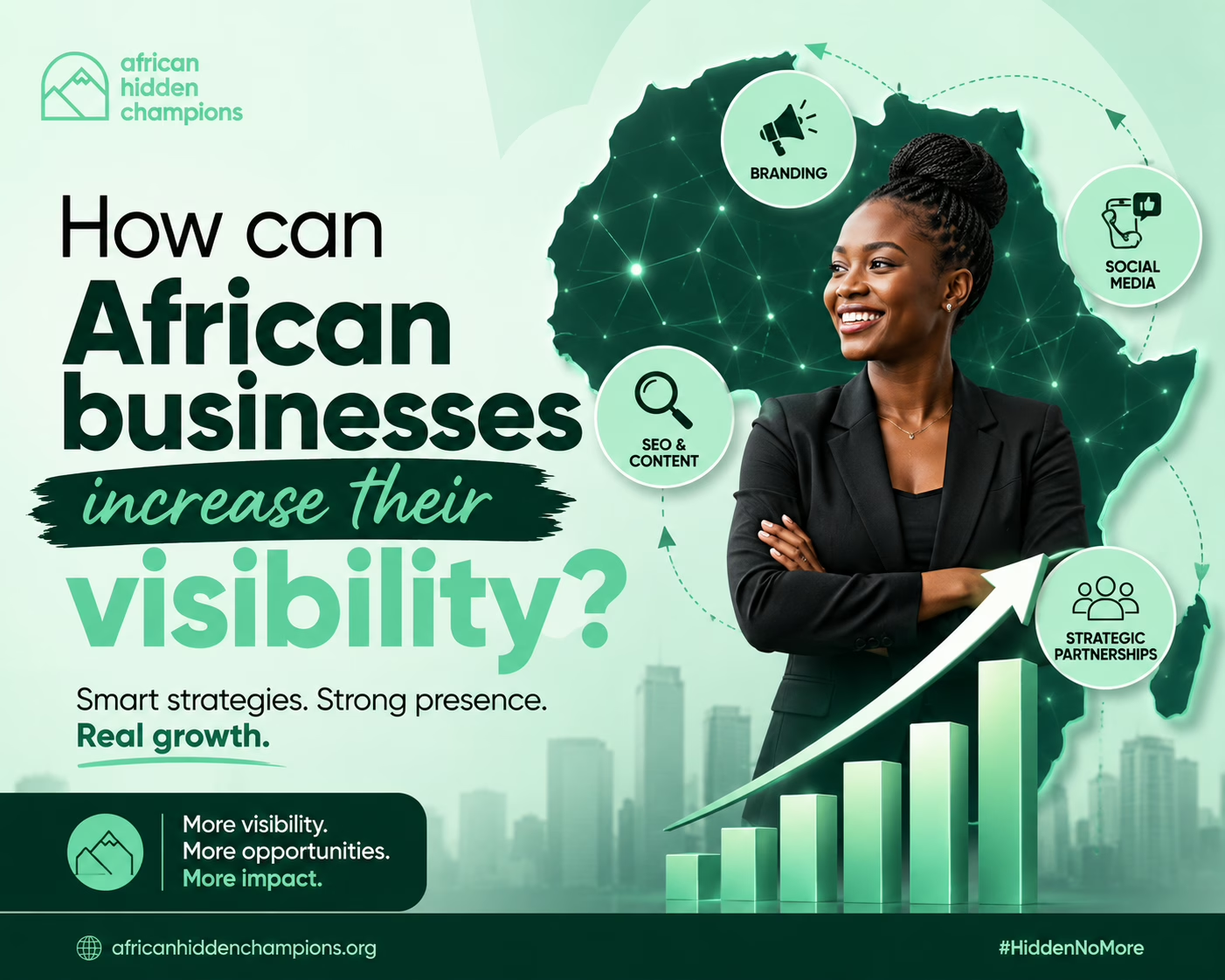
After years of working closely with African businesses across sectors, one reality continues to emerge clearly: many African companies are significantly more competitive than the world realises.
Across logistics, manufacturing, financial services, agriculture, technology, healthcare, retail, and industrial sectors, African businesses are solving complex problems daily. Many are scaling across borders, creating jobs, supporting SME ecosystems, and operating within some of the most demanding market conditions globally.
Despite this, these businesses often remain underrepresented in global business conversations. This is not because they lack quality. Rather, it is because market presence has become an essential part of competitiveness. Across the global business landscape, the most successful companies recognise that competitiveness is shaped not only by the quality of their products or services, but also by three key factors: credibility, a compelling narrative, and sustained audience engagement. Recognition, in turn, influences investor confidence, partnership opportunities, talent attraction, customer trust, and even policy influence.
In our experience working with scaling companies across the continent through the African Hidden Champions network, many businesses still treat communication and visibility as secondary to execution. Their focus is understandably on operations, delivery and growth in often complex economic environments. As a result, communication tends to become reactive rather than strategic or, at best, something that receives attention only when the business has "time."
The irony is that many of Africa's strongest businesses remain relatively unknown beyond their home markets despite operating at globally competitive standards. Without consistent visibility, the global narrative about Africa's economic potential continues to be shaped by external voices rather than by the businesses driving innovation and growth from within the continent. This influences investment flows, partnership opportunities and even global perceptions of African innovation. From this perspective, taking ownership of the narrative is no longer just a communications exercise; it is a strategic business imperative.
The businesses gaining global attention today understand that visibility is not about noise. It is about clarity. It is about helping audiences understand what problem a business solves, why it matters, who is behind it and what future it is helping shape. African businesses cannot afford to remain absent from the conversations shaping global business, capital, technology and trade.

Three practical shifts can immediately strengthen the visibility and positioning of African businesses.
The first is to communicate consistently rather than occasionally. Many businesses only become visible when launching a product, announcing funding, or attending an event. Globally recognised brands remain part of the market conversation continuously through thought leadership, media engagement, newsletters, podcasts, and strategic digital presence.
Practical ways to do this:
- Post one meaningful LinkedIn insight or business reflection every week
- Share customer success stories or operational lessons monthly
- Send a quarterly newsletter to clients, partners, and stakeholders
- Build relationships with journalists, podcasts, and business platforms within your industry
- Comment consistently on trends shaping your sector, rather than only promoting products or services
The second is to position founders and leadership teams as visible extensions of the business itself. Leadership visibility is directly linked to trust, credibility and audience engagement. Increasingly, people connect with individuals before they connect with institutions. Across the world, founders and executives have become trusted voices within their industries through thought leadership, media interviews, conference participation and informed commentary. Founder visibility has become a strategic business asset that strengthens credibility, builds trust and creates stronger connections with customers, partners and investors.
Practical ways to do this:
- Encourage founders and executives to become active on LinkedIn
- Publish short opinion articles or founder reflections regularly
- Participate in panels, webinars, podcasts, and industry events
- Share lessons from scaling, leadership, hiring, innovation, or market realities
- Position leadership as contributors to industry conversations, not only representatives of the company
Finally, businesses should focus on why their work matters to their audience. Visibility becomes far more compelling when organisations communicate impact rather than simply achievement. It is not only about how good a business is, but about the problems it helps to solve. Many African businesses communicate what they do, but not why it matters.
Those that clearly articulate how they solve problems, create value, strengthen ecosystems, and shape industries are far more likely to build meaningful, lasting relationships with customers, partners, investors and the wider public.
Practical ways to do this:
- Lead with the problem your business solves before discussing your product or service
- Use real examples and measurable outcomes wherever possible
- Showcase how your work impacts industries, communities, customers, or supply chains
- Tell stories about people, transformation, and market impact rather than only business milestones
- Create messaging that explains why the business matters within Africa’s broader growth story
Some of the world's most respected business ecosystems built their influence intentionally over decades through media, narrative, partnerships and strategic positioning. Increasingly, the businesses shaping perception are also the businesses shaping markets.
References and Insights:
- 2024 Edelman Trust Barometer
- African Development Bank private sector growth insights
- Africa CEO Forum discussions on African competitiveness and scaling
- Observations and engagement from the African Hidden Champions network
